
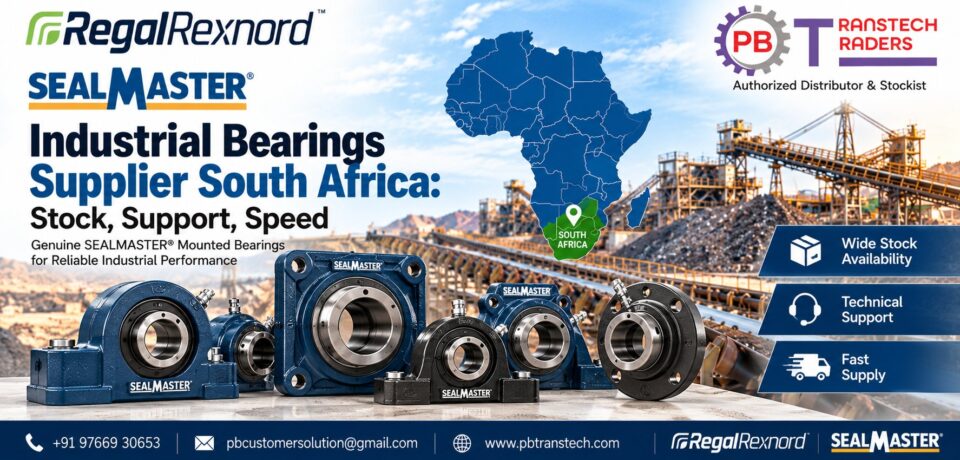
Industrial Bearings Supplier South Africa: How to Choose
Quick answer: Choose an industrial bearings supplier by matching bearing types to your applications, checking local stock of critical sizes, testing technical support with a real failure, confirming documentation and agreeing service levels in writing. The cheapest quote is rarely the lowest cost once downtime is included.
An industrial bearings supplier South Africa’s plants can rely on does more than fill orders. The right partner helps you select the correct bearing, keeps the right stock on hand and supports you when something fails. This article explains how to compare suppliers of industrial bearings, so your plant gets the reliability it needs and your maintenance team gets the support it expects.
The main bearing types used in South African industry
Industrial plants use several bearing families, and each suits different loads and speeds. Choosing the wrong family is an expensive mistake even when the part is genuine.
| Bearing type | Typical use | What to check |
|---|---|---|
| Deep groove ball bearings | Motors, light drives and fans | Speed limits and radial loads |
| Spherical roller bearings | Heavy and misaligned loads, vibrating equipment | Lubrication and internal clearance |
| Taper roller bearings | Gearboxes, axles and combined loads | Setting and adjustment |
| Mounted bearings (pillow blocks, flange units) | Conveyors, fans and processing lines | Housing fit, sealing and alignment |
A supplier who understands these differences can help you choose the right design, not just the nearest catalogue match.
Select by application, not by catalogue number
The catalogue number is only the starting point. Record the load, speed, temperature, environment and maintenance access before choosing a bearing. Dusty, wet or high-temperature sites usually need better sealing and a lubrication plan that suits the conditions.
- Note the direction and size of loads, including shock loads and axial thrust.
- Record the operating speed and any start-stop cycles.
- Describe the environment: dust, water, chemicals and temperature range.
- Note how the bearing is lubricated and how often it can be serviced.
A supplier who asks these questions before recommending a product is more likely to deliver a bearing that performs as expected. The basic rating life method in ISO 281 is a useful common language for comparing options.
Local stock versus imported parts
Stock availability affects how quickly you can respond to a failure. Local stock of common sizes and part numbers can shorten repair time. Imported parts may offer a wider range but usually need longer lead times, so plan for them ahead of time.
Ask the supplier which items are held locally, which are ordered on request, and how long each route takes. Use this information to decide which spares to keep on your own shelves.
Technical support and after-sales service
After-sales support shows how a supplier will treat you when something goes wrong. Ask who you will speak to if a bearing fails early, and how the supplier investigates the cause. A useful response looks at operating conditions, lubrication, sealing and fitting, not only the part.
For a fuller checklist, read our South Africa bearing supplier guide.
Matching the supplier to plant size and risk
A large plant with many critical drives needs a supplier who can hold stock and respond quickly. A smaller site may get more value from a supplier who offers flexible order quantities and clear technical advice. The more a failure costs, the more weight you should give to stock depth and response time.
Consider whether your supplier can support several sites. Multi-site buyers often benefit from one supplier who understands the range of equipment in use, keeps consistent records and can move spares between locations when needed.
Documentation and genuine product checks
Keep documentation for every order. Traceable certificates, packaging labels and batch details help you investigate failures and confirm what you have fitted. If a supplier cannot provide these, weigh the risk carefully. Trade press in South Africa has reported that counterfeits are not covered by the brand owner’s warranty, which makes documentation even more important. Engineering News (Creamer Media), “Counterfeit bearings prominent in local industry”, 11 November 2022.
For a practical process to check incoming parts, see our guide on how to avoid counterfeit bearings in Africa.
Think about the supplier relationship as a long-term arrangement. The first order shows what a supplier can do, but the tenth order shows whether it can be relied on under pressure. Review performance every quarter against the agreed response times, delivery records and claim outcomes, and raise concerns early rather than waiting for a serious failure.
Service levels to expect from a supplier
Good service is measurable. Agree on response times for quotes, technical queries and urgent orders before you need them. Ask how the supplier reports delivery problems and who is responsible for correcting them. A one-page service agreement keeps expectations clear on both sides.
Also consider how the supplier supports your team after installation. Useful support includes guidance on storage and handling, clear fitting instructions for unusual parts, and willingness to review bearings removed early. A supplier who takes an interest in why a bearing failed can help prevent the next failure.
Price comparison on a like-for-like basis
Compare quotes on the same basis. Two quotes can look different because one includes documentation, delivery to site or a longer warranty. Write down what each quote includes, then compare total landed cost and expected service. This keeps the decision fair and easier to explain to finance and management.
What a good industrial bearings supplier quote includes
A good quote lists each bearing by full part number, with the manufacturer, quantity, unit price and currency. It states whether delivery to site is included, the expected lead time, the warranty period and the claims process. Where a substitute is offered, it gives the specification and documentation for the alternative.
Ask for the basis of any life or performance claim. A supplier should be able to explain the rating method and the operating assumptions behind it, including load, speed and lubrication. Claims without a stated basis are harder to compare and easier to dispute.
Check the validity period of the quote. Prices and stock can change quickly, so a quote that lasts only a few days should be ordered promptly or re-confirmed before it is used for a planned shutdown.
Compare local and overseas options on the same terms. A quote from an overseas source may look cheaper until freight, clearance time and the cost of waiting are included. A local quote with stock on hand can be the better choice for critical items, even at a higher unit price.
Industrial bearings supplier South Africa shortlist process
- List your top 20 bearing part numbers by usage and criticality.
- Ask each shortlisted supplier to quote the part numbers, stock position and delivery time.
- Request a technical review of one recent failure or application.
- Place a trial order and check the parts on arrival.
- Review performance after three months and adjust your stock plan.
P.B. Transtech supplies industrial power transmission products for African buyers. Our team can help you review part numbers and application details. You can read more in our industrial couplings supplier guide for Africa.
Frequently asked questions
What should I look for in an industrial bearings supplier?
Look for a range that matches your plant, technical support that understands your application, realistic stock and delivery times, and traceable documentation.
Should I buy from a local supplier or an importer?
Often both. Keep common spares from a supplier with local stock, and use importers for specialised parts that are needed less often.
How do I know which bearing type to choose?
Start with the load, speed, environment and maintenance access. A technical review with the supplier can confirm the bearing type and seal design.
Why is the cheapest quote not always the best?
Downtime, early failure and poor documentation can cost far more than the price difference. Compare total cost, including the risk of a late or incorrect part.
References
- Engineering News (Creamer Media), “Counterfeit bearings prominent in local industry”, 11 November 2022.
- ISO 281: Rolling bearings, dynamic load ratings and rating life, International Organization for Standardization.